Yunnan white tea
By Valley Green Tea
Posted On September 11, 2018
The recent presence of Yunnan white tea
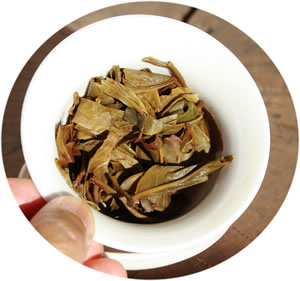
 The Yunnan Province is mostly known for its history of Pu-erh tea production when it comes to teas. The product of white tea in Yunnan is relatively recent, speculated as a result of the following:
- The overlap of the processing technique between the traditional Fu-Ding white tea and certain Pu-erh teas, for example both are sun dried.
- The premium Fu-Ding white teas‘ prices have sky rocketed during the recent years (the sky rocketed white tea prices). Although the prices of the Pu-erh teas produced from the ‘famous hills’ have also gone through the roof, the crops from the not so famous areas are still abundant and their market prices are not even close to the Fu-Ding white teas.
- A premium Pu-erh tea is often made of a optimal mixture of premium bud leaves, mature leaves and even some twigs. The Fu-Ding white teas on the other hand are graded like their green tea cousins, the bud leaves (Silver Needle) are the most valuable ones while the teas made of mature leaves (eg Shou Mei) are much cheaper.
- The combination of the above two have resulted in the Yunnan ‘bud leaves’, believed to be of similar quality to the Fu-Ding bud leaves although there are surely some differences, are in much higher supply with lower prices.
The evidence of the path crossing between Fu-Ding white tea and Yunnan white tea:
- White tea cakes being compressed in the Fu-Ding area of the Fu-Jian Province with Fu-Ding white teas during the recent years using Pu-erh cake compressing techniques.
- Yunnan white teas are being produced in Yunnan, in both loose and cakes
What is Yunnan white tea
Yunnan white tea is defined as the following in a nutshell:
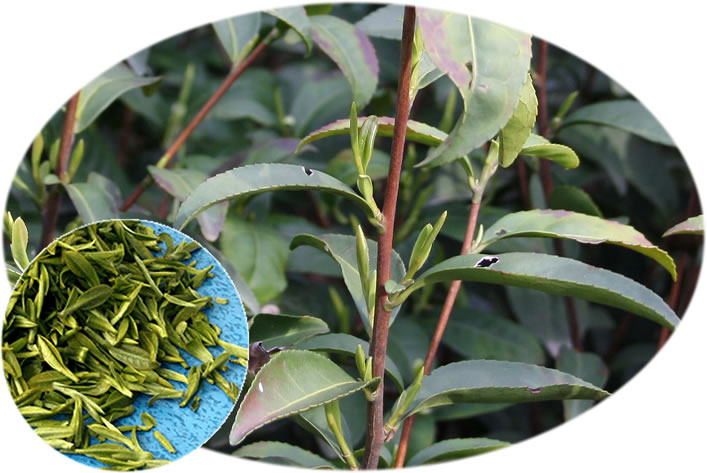
- Yunnan arbor tea tree leaves as material source
- processed with the methods very similar to that of the Fu-Ding white tea.
The differences between the Fu-Ding and Yunnan white teas
Some differences listed belwo (using silver needle as an example):
| Fu-Ding Silver Needle | Yunnan Silver Needle | |
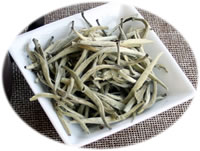
| Dry leaves | Shorter, fuller with longer and fluffy white fur | Longer, stronger, curved with shorter and smooth white fur |
| Aroma | Grassy, sun dried floral aroma | Woody, almost a hint of Pu-erh |
| Brew | Light yellow | Light brown |
| Taste | Fruity grassy with a faint honey sweet, refreshing and smooth | Potent at first contact, a complex of woody, forest flower, mint, citrus etc |
| Hui-Gan (aftertaste) | Gentle, silky and refreshing | Lingering with strength |
| Infusions | 4-5 | 6 or more |
Recent Articles
-
Can I drink white tea every day?
Absolutely! The Chinese say it is Ok not to have food for 3 days, but not without tea for a day. Like all other Chinese teas, green tea, yellow tea,…
-
Pu-erh white frost vs mould
I was again approached by a customer today to say there was some ‘mould’ discovered on an aged Pu-erh tea cake received, which is actually the ‘white frost’. I thought…
-
Is Ok to drink green tea every day?
Green tea has had a consumption history in China for more than 2000 years. The Chinese say “it is Ok to go with food for 3 days, but not without…
-
Is it Ok to drink Jasmine tea every day
Absolutely. Jasmine tea has been consumed in China for nearly 800 years, especially in certain regions such as the Fuzhou area of the Fujian province. Tea is food in China….
-
Green teas handmade vs machine-made
Green teas have been traditional hand made in China and Japan for millenniums. It is labor intensive and inevitably keeping the tea prices up. I have recently visited a green…
-
How to tell a Pu-erh quality by its wet leaves
A well aged Pu-erh tea is a sought-after product in the Pu-erh community. There are various methods however to make a Pu-erh tea looking like aged, eg high temperature &…