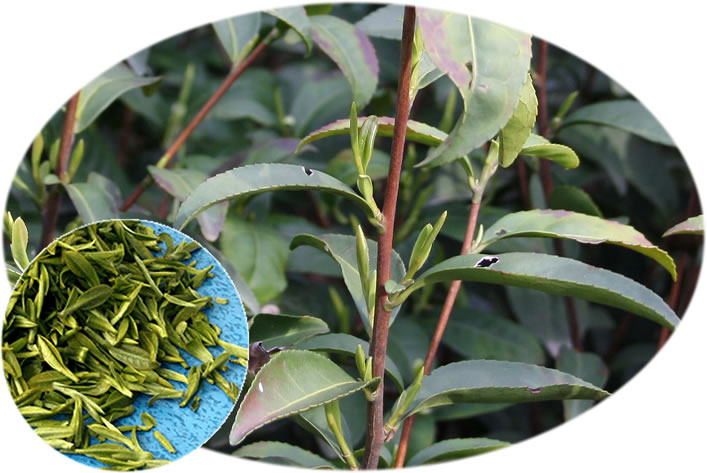
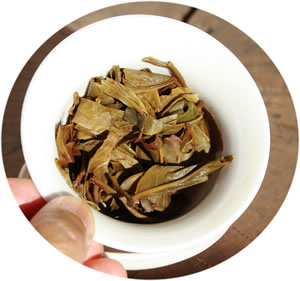
White tea’s history
By Valley Green Tea
Posted On March 21, 2008
The origin of Chinese white tea
Like many other teas, white tea originated from the the tea country of China – the Fu Jian Province.
White teas’ production, especially the premium Chinese white teas, is still very limited to date. Fu-Ding (福鼎), Zheng He (政和), Song-Xi (松溪) and Jian-Yiang (建阳) are the known pocket areas of the Fujian Province to produce the best white teas in the world.
Chinese white tea history
There are various theories regarding how long the white teas have been around for, with some believing it has a production and consumption history in China for 4000 years. This makes white tea to be among the oldest teas, much older than the histories of both green tea and Oolong tea.
One of the reasons that some scholars believe white tea is the original tea of all teas is its relatively simple processing method, withering and drying. It is believed this was the start of people started preserving fresh tea leaves for later use.
The later teas, such as green tea and Oolong tea, have developed more comprehensive techniques in their processing, such as rubbing, rolling, fermenting and backing etc since.
The ‘new’ white teas
Due to the recent surge of white tea popularity and thus their prices, there are a few ‘new’ white teas appear on the market:
- Fu Ding Da Bai Hao (Fuding Big White Fur) is the original and premium tea plant for producing the authentic white teas. There are producers now using other tea plant species to make and market ‘white teas’ that do not posses the quality of the Fujian white tea.
- The white teas made using the plant specie Fu Ding Da Bai Hao, but cultivated elsewhere with different soil and climate conditions as the original Fujian white teas.
- White teas produced elsewhere using different tea plants with different techniques, such as Yunnan white tea.
These white teas are not only believed to have less internal quality as the authentic Fujian white teas, an experienced white tea consumer can also discern the differences in their appearance, aroma, texture and flavor of the brew and aftertaste etc.
Recent Articles
-
Can I drink white tea every day?
Absolutely! The Chinese say it is Ok not to have food for 3 days, but not without tea for a day. Like all other Chinese teas, green tea, yellow tea,…
-
Pu-erh white frost vs mould
I was again approached by a customer today to say there was some ‘mould’ discovered on an aged Pu-erh tea cake received, which is actually the ‘white frost’. I thought…
-
Is Ok to drink green tea every day?
Green tea has had a consumption history in China for more than 2000 years. The Chinese say “it is Ok to go with food for 3 days, but not without…
-
Is it Ok to drink Jasmine tea every day
Absolutely. Jasmine tea has been consumed in China for nearly 800 years, especially in certain regions such as the Fuzhou area of the Fujian province. Tea is food in China….
-
Green teas handmade vs machine-made
Green teas have been traditional hand made in China and Japan for millenniums. It is labor intensive and inevitably keeping the tea prices up. I have recently visited a green…
-
How to tell a Pu-erh quality by its wet leaves
A well aged Pu-erh tea is a sought-after product in the Pu-erh community. There are various methods however to make a Pu-erh tea looking like aged, eg high temperature &…