White tea cake and Pu-erh white tea
By Valley Green Tea
Posted On October 22, 2017
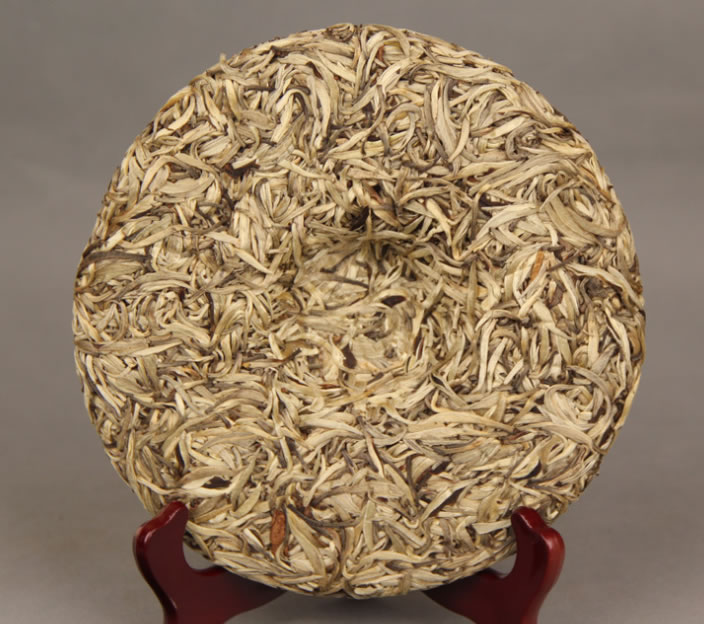 During recent years, the white tea manufacturers have been using exact pu-erh tea’s compressing technics to produce white tea cakes, while pu-erh tea producers have also produced their ‘version’ of white tea cakes, eg Moon Light White (月光白) Silver Needle (大白毫). I have spoken to a pu-erh tea manufacturer, he said he had consulted a tea expert in China and they could not clearly define the difference.
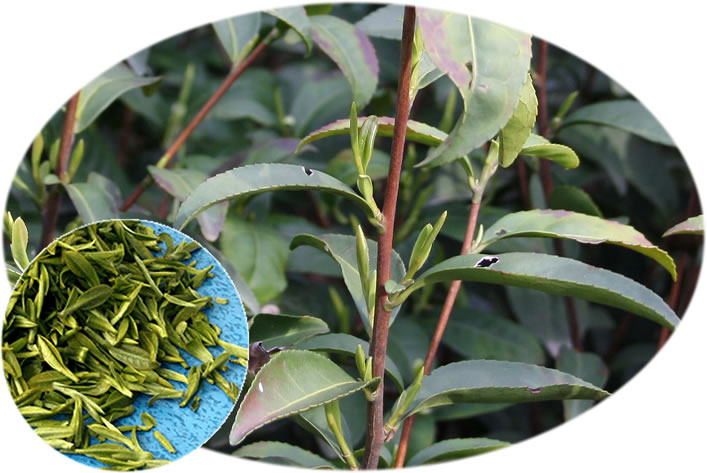
There is an obvious difference here: white tea leaves are of ‘small leaf species’ of Camellia sinensis while Pu-erh bud leaves belong to the ‘big leaf species’. They are different biologically and therefore have rather different nature and path during the aging process.
Over and above this apparent difference, there is also an economic interest behind this overlap.
White tea, being one of the ‘small leaf species’ of Camellia sinensis, have predominantly been produced and consumed fresh. Similar to their green tea cousins, the bud leaves are considered of the highest quality and their quality hierarchy is ranked based on the quantity of bud leaves contained.
There has been an aged white tea culture in the local tradition (Fu-Ding area of the Fu Jian Province), but mainly for their medicinal properties. White teas have been described as: first year a tea, third year a medicine and after five years they become a (medicinal) treasure. Aged white teas are believed to have profound anti-inflammatory effects and was once used for high temperature relief caused by measles infections before the contemporary medicine.
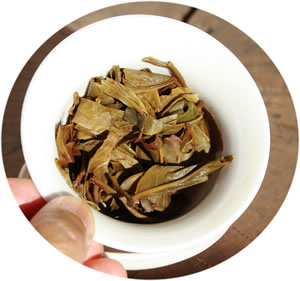
Pu-erh teas on the other hand, being the ‘big leaf species’ of Camellia sinensis, are only suitable for consumption after certain level of aging (softening), two years minimum after their harvest for the raw (Sheng) teas. To facilitate the aging process, they have been conventionally compressed into cakes, bricks or Tuo, and normally contain young and mature leaves with some twigs. The most valuable crops are those from the ancient tea tress (most over a few hundred years old), bud leaves, opened leaves and even some young twigs. The focus here is certainly not just the bud leaves.
The traditional Pu-erh tea producers then saw an opportunity: the bud leaves of certain Pu-erh tea trees are not nearly as sought after as the top grade bud only white tea Silver Needle, for example, the cost of the Moon Light White (月光白) bud leaves is only the fraction of the cost of the Silver Needle white tea, but once compressed and aged, is expected to have very similar taste and functionalities as aged white tea if not superior. This somehow marked the birth of the pu-erh tea cakes.
Pu-erh white tea cake is a relatively new product and in my opinion could be a product that is of value for money. This however remains to be judged by time and consumers.
Recent Articles
-
Can I drink white tea every day?
Absolutely! The Chinese say it is Ok not to have food for 3 days, but not without tea for a day. Like all other Chinese teas, green tea, yellow tea,…
-
Pu-erh white frost vs mould
I was again approached by a customer today to say there was some ‘mould’ discovered on an aged Pu-erh tea cake received, which is actually the ‘white frost’. I thought…
-
Is Ok to drink green tea every day?
Green tea has had a consumption history in China for more than 2000 years. The Chinese say “it is Ok to go with food for 3 days, but not without…
-
Is it Ok to drink Jasmine tea every day
Absolutely. Jasmine tea has been consumed in China for nearly 800 years, especially in certain regions such as the Fuzhou area of the Fujian province. Tea is food in China….
-
Green teas handmade vs machine-made
Green teas have been traditional hand made in China and Japan for millenniums. It is labor intensive and inevitably keeping the tea prices up. I have recently visited a green…
-
How to tell a Pu-erh quality by its wet leaves
A well aged Pu-erh tea is a sought-after product in the Pu-erh community. There are various methods however to make a Pu-erh tea looking like aged, eg high temperature &…