The difference between an aged aroma and Ou-Dui scent
By Valley Green Tea
Posted On March 29, 2019
 Pu-erh Ou-Dui
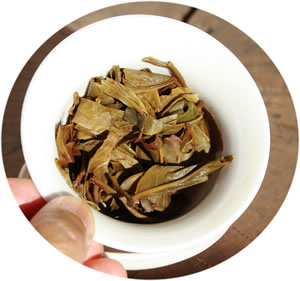
Ou-Dui (渥堆) is the speed fermentation process developed during the mid-70’s in China for the purpose of achieving an ageing short cut of a Pu-erh tea. The process allows a young and newly harvested raw (Sheng) Pu-erh quickly ferment under the controlled humidity and temperature conditions, mediated by the micro-organisms to achieve the state of a speed aged pu-erh in a short period , the ripened Pu-erh: dark tea brew, woody aged aroma, earthy and sweet flavour and smooth texture.
Pu-erh Ou-Dui scents
The negative by-product of this process, the Ou-Dui smell/scents (渥堆味), however becomes one of the challenges between a premium quality and low quality product. The Ou-Dui scents are described as: unpleasant, stuffy, mouldy, sour, off and fishy.
The differences between Ou-Dui scents and aged aroma
These Ou-Dui scents sometimes can be confused with aged aroma, which should be clean, pleasant, woody, mellow, soft and warming.
We advise new and naive Pu-erh tea consumers to pay special attention to this, try out different samples and products to gain the experiences to appreciate the real qualities of the premium Pu-erh teas.
Recent Articles
-
Can I drink white tea every day?
Absolutely! The Chinese say it is Ok not to have food for 3 days, but not without tea for a day. Like all other Chinese teas, green tea, yellow tea,…
-
Pu-erh white frost vs mould
I was again approached by a customer today to say there was some ‘mould’ discovered on an aged Pu-erh tea cake received, which is actually the ‘white frost’. I thought…
-
Is Ok to drink green tea every day?
Green tea has had a consumption history in China for more than 2000 years. The Chinese say “it is Ok to go with food for 3 days, but not without…
-
Is it Ok to drink Jasmine tea every day
Absolutely. Jasmine tea has been consumed in China for nearly 800 years, especially in certain regions such as the Fuzhou area of the Fujian province. Tea is food in China….
-
Green teas handmade vs machine-made
Green teas have been traditional hand made in China and Japan for millenniums. It is labor intensive and inevitably keeping the tea prices up. I have recently visited a green…
-
How to tell a Pu-erh quality by its wet leaves
A well aged Pu-erh tea is a sought-after product in the Pu-erh community. There are various methods however to make a Pu-erh tea looking like aged, eg high temperature &…