Oolong tea varieties
By Valley Green Tea
Posted On June 6, 2011
Oolong tea (sometimes call Qingcha 青茶) is a class of Chinese teas that are semi-fermented. They are described to have both green teas’ refreshing nature and black teas’ mellow taste, much loved by premium loose-leaf tea consumers.
Oolong tea’s birthplace is the Fujian Province of north-east China. The current production of Oolong teas is still much around this area including: Fujian, Guang-Dong and Taiwan.
Fu-Jian Oolong teas:
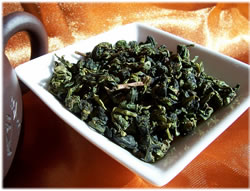 The Fu-Jian province of South-eastern China is the predominant Oolong tea producing region. There are two main classes of Oolong teas produced here:
- The north Fujian Oolong. Classic ones being Wuyi rock teas such as Da Hong Pao, Rou Gui, Wuyi Shuixian (Shui Hsien), Gold Turtle (Shui Jin Gui); and Iron Monk (Tie Luo Han).
- The south Fujian Oolong. Classic ones being the Tie Guan Yin produced in the Anxi are and the Zhang-Ping Shuixian produced in the Zhang-Ping area. They are traditionally less fermented and lighter roasted/baked. They are typically greener, more refreshing than the North Fujian Oolong teas.
Guang-Dong Oolong tea:
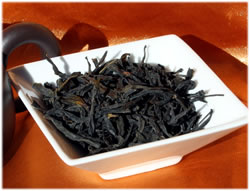 The Guang-Dong province is adjacent to Fu-Jian. There is quite an overlap of th eclimate conditions and the diet traditions between the two provinces. Not surprisingly, the tradition of Oolong tea consumption has also been shared.
The most famous Guang-Dong Oolong is the Phoenix Single Bush (Feng Huang Dan Cong 凤凰单丛) – a collection of various premium Dan Cong (single bush) sub-species and the Oolong teas produced from these tea plants. They are known for their strong and rich dark colur red/brown tea leaves, brightly yellow tea brew and intense aroma combining the fragrances of blossoms, fruits, nuts and honey.
Taiwan Oolong tea:
Taiwan’s Oolong tea production started in the 19th century. It is believed that the Taiwan Oolong teas are the close cousins of the Fujian Oolong teas. They originated from Fujian, modified and extended to form their unique system with distinctive natures. Some classic ones are:
- High mountain rolled Oolong – cultivated on high mountains where there is plenty of mist coverage and short sunlight – ideal conditions for the tea plants to grow. Example, Mt Ali and Mt Yu.
- Jin Xuan Oolong, typically grown on mid or low altitude mountains. It is known for it’s trace of milk flavour.
- Oriental beauty, known for it is inset bite. The leaves bitten by the inset ‘Jacobiasca formosana’ and the natural healing process of the leaves after produce a unique honey flavour to the tea.
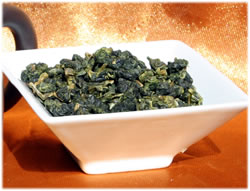
The Taiwan High Mountain Oolong tea’s production is quite limited due to the restricted farm land on the island. The teas are generally consumed by locals and are rarely exported.
Other Oolong tea:
Limited Oolong teas are also produced in some other Asian and African countries.
Recent Articles
-
Can I drink white tea every day?
Absolutely! The Chinese say it is Ok not to have food for 3 days, but not without tea for a day. Like all other Chinese teas, green tea, yellow tea,…
-
Pu-erh white frost vs mould
I was again approached by a customer today to say there was some ‘mould’ discovered on an aged Pu-erh tea cake received, which is actually the ‘white frost’. I thought…
-
Is Ok to drink green tea every day?
Green tea has had a consumption history in China for more than 2000 years. The Chinese say “it is Ok to go with food for 3 days, but not without…
-
Is it Ok to drink Jasmine tea every day
Absolutely. Jasmine tea has been consumed in China for nearly 800 years, especially in certain regions such as the Fuzhou area of the Fujian province. Tea is food in China….
-
Green teas handmade vs machine-made
Green teas have been traditional hand made in China and Japan for millenniums. It is labor intensive and inevitably keeping the tea prices up. I have recently visited a green…
-
How to tell a Pu-erh quality by its wet leaves
A well aged Pu-erh tea is a sought-after product in the Pu-erh community. There are various methods however to make a Pu-erh tea looking like aged, eg high temperature &…