Loose tea vs tea bags – where to start loose leaf green tea
By Valley Green Tea
Posted On December 14, 2014
Question:
‘I am a 6-7 large-mugs-a-day Green Tea drinker, and after visiting your marvellous website, fear I am missing out – as I am currently only a Green Tea bag drinker 🙁 I am therefore greatly interested in the loose leaf, and was considering trying the An Ji White Tea, yet the Dragon Well and Mao Jian also sound appealing. Can you perhaps recommend a Green Tea to me – as I am clearly new to loose leaf teas?’
Answer:
The reason that the tea bags are rarely of good quality is that the broken leaves are heavily and rapidly oxidised when they are extensively exposed to the oxygen in the air (please note: this oxidisation is different from the enzyme triggered oxidisation during the Oolong and black tea processing). When the teas leaves are oxidised, they become bitter and tea brew rough in texture. The tea sorting process is in the sequence of: whole leaves -> fanning -> dust. The teas then are graded within each category based on their quality grade. Tea bags are made of the tea dust only and the whole leaves are never crushed into dust to make tea bags.
Generally speaking, loose leaf teas (including green tea) are of higher quality, although there are some exceptions:
- There are low quality loose leaf teas due to all the variants contribute to high or low quality teas: cultivation of the plants, harvest time, processing skills, adequate storage etc.
- There have been new technologies developed to manufacture whole leaf teas into tea bags, such as pyramid tea bags. The quality of these tea bags are close to the loose leaf teas (with small variations).
The differences in summary:
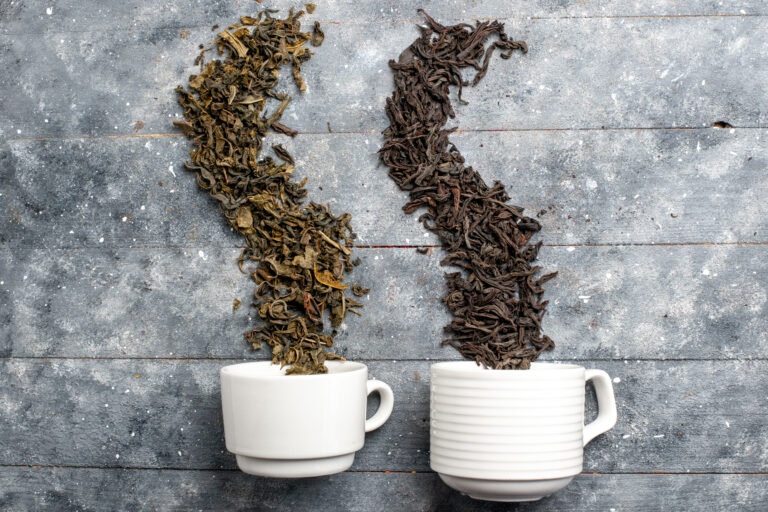
• Loose leaf teas are generally less bitter with smoother texture
• Loose leaf teas are more refreshing, lingering and aromatic
• Nutrients wise, fresh loose leaf teas contain higher level of anti-oxidants
Recommendation of green teas to loose leaf tea beginners
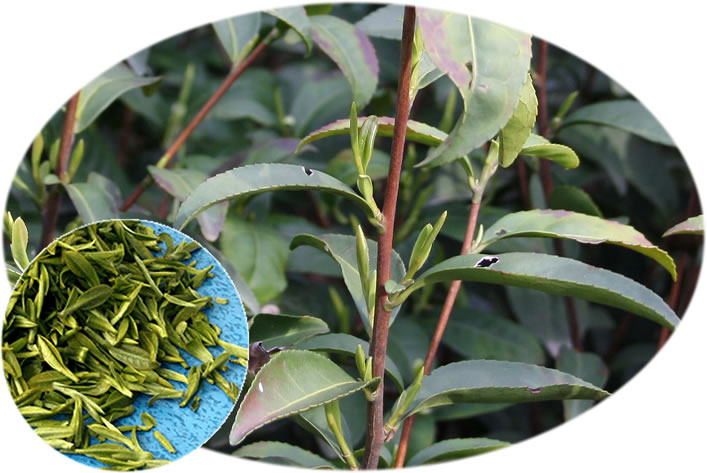
We would recommend to start from some Chinese classic green teas, such as the Dragon Well (Long Jing), Bi Luo Chun (spring snail) or Mao Feng. There are subtle differences and everyone has a different preference. The only way to find out what is yours is by trying.
Recent Articles
-
Can I drink white tea every day?
Absolutely! The Chinese say it is Ok not to have food for 3 days, but not without tea for a day. Like all other Chinese teas, green tea, yellow tea,…
-
Pu-erh white frost vs mould
I was again approached by a customer today to say there was some ‘mould’ discovered on an aged Pu-erh tea cake received, which is actually the ‘white frost’. I thought…
-
Is Ok to drink green tea every day?
Green tea has had a consumption history in China for more than 2000 years. The Chinese say “it is Ok to go with food for 3 days, but not without…
-
Is it Ok to drink Jasmine tea every day
Absolutely. Jasmine tea has been consumed in China for nearly 800 years, especially in certain regions such as the Fuzhou area of the Fujian province. Tea is food in China….
-
Green teas handmade vs machine-made
Green teas have been traditional hand made in China and Japan for millenniums. It is labor intensive and inevitably keeping the tea prices up. I have recently visited a green…
-
How to tell a Pu-erh quality by its wet leaves
A well aged Pu-erh tea is a sought-after product in the Pu-erh community. There are various methods however to make a Pu-erh tea looking like aged, eg high temperature &…