Chinese tea fermentation in an image
By Valley Green Tea
Posted On December 4, 2017
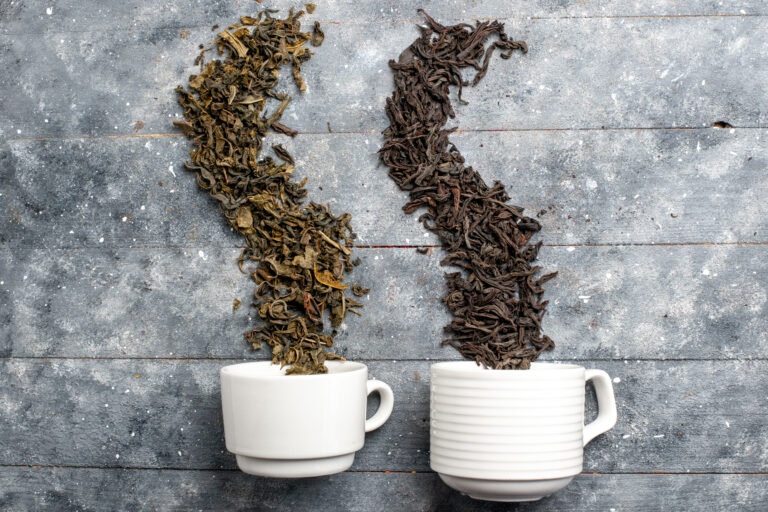
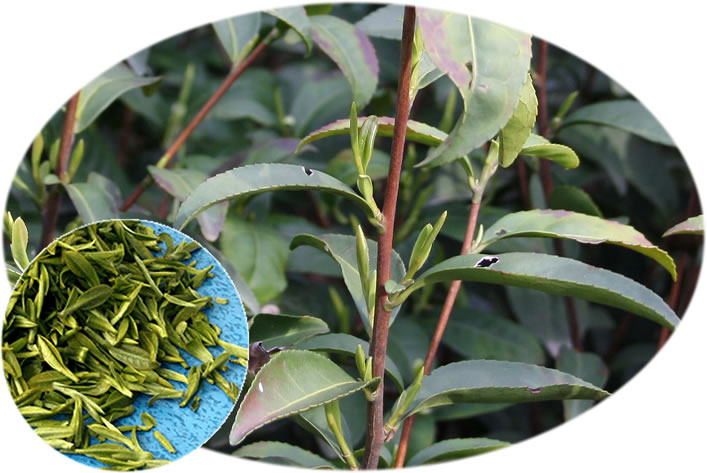
The level of fermentation is THE element used to categorise teas. For example, green teas are unfermented, Oolong teas are semi-fermented and black teas are fully fermented. The level of fermentation of teas is high associated with its appearance and taste: Green teas are light in colour, more ‘grassy green’ and refreshing in aroma and taste; Black teas are more smooth in texture and often dark yellow and red in tea brew colour.
 A way of illustrating this is through Oolong tea, classified as semi-fermented. Different Oolong teas have various fermentation levels, which is carefully controlled and crucial to the nature of the final product. During Oolong tea’s processing, one of the important steps is to ‘bruise’ the edges of the tea leaves by putting the leaves in a bamboo cylinder and toss around (Yao Qing – 摇青). This process triggers the enzymes to be released from the cells and start a chain of chemical reactions within the tea leaves to facilitate the later fermentation. Once the tea leaves are fermented to the desired level, a process called Chao Qing (炒青) is applied, where the tea leaves are heated (NOT dired!), often in a wok, with highly skilful temperature control to stop the fermentation to progress further.
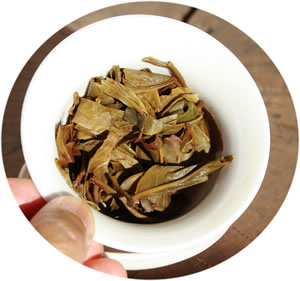
 The image below is from a semi-fermented Oolong (Zhang Ping Shui Xian). As seen on image, the edges of the tea leaves are red in comparison to the rest of the green ( called ‘green leaf of golden edge’ – 金边绿叶 in Chinese). The red part is where the leaves are fermented and border between the red and the green is where the fermentation stopped.
All teas are categorised around their levels of fermentChinese Oolong teaation, and maybe some additional elements if relevant.
Recent Articles
-
Can I drink white tea every day?
Absolutely! The Chinese say it is Ok not to have food for 3 days, but not without tea for a day. Like all other Chinese teas, green tea, yellow tea,…
-
Pu-erh white frost vs mould
I was again approached by a customer today to say there was some ‘mould’ discovered on an aged Pu-erh tea cake received, which is actually the ‘white frost’. I thought…
-
Is Ok to drink green tea every day?
Green tea has had a consumption history in China for more than 2000 years. The Chinese say “it is Ok to go with food for 3 days, but not without…
-
Is it Ok to drink Jasmine tea every day
Absolutely. Jasmine tea has been consumed in China for nearly 800 years, especially in certain regions such as the Fuzhou area of the Fujian province. Tea is food in China….
-
Green teas handmade vs machine-made
Green teas have been traditional hand made in China and Japan for millenniums. It is labor intensive and inevitably keeping the tea prices up. I have recently visited a green…
-
How to tell a Pu-erh quality by its wet leaves
A well aged Pu-erh tea is a sought-after product in the Pu-erh community. There are various methods however to make a Pu-erh tea looking like aged, eg high temperature &…