What is Pu-erh tea?
By Valley Green Tea
Posted On April 6, 2008
Pu-erh tea belongs to a category of Chinese tea called Compressed Tea. Whole leaves typically compressed into various shapes: cakes, bricks and nuggets etc. This assists this tea to continue fermenting after their production has completed. In this respect Pu-erh tea “ages”, like for example wine or cheese.
Many people invest in Pu-erh tea, like they might invest in wine. They purchase quantities of tea and let it “mature” and increase in value with time.
Note that this characteristic is at odds with requirements for other tea varieties, where a premium is paid for “freshness”, related to lack of age!
There are also two major varieties of Pu-erh teas:
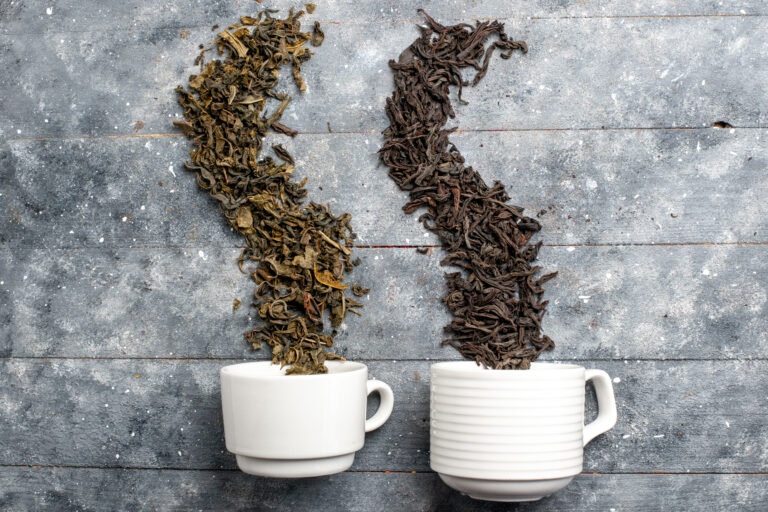
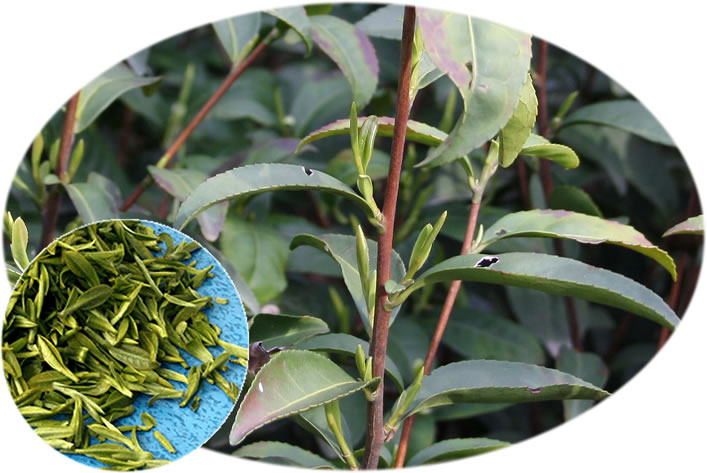
- Raw (green, Sheng, Mao Cha) Pu-erh tea: the tea leaves are compressed into cakes, bricks, Tuo Cha or stay loose and the fermentation starts immediately after the production. The teas are not normally used until two years after production. The newly produced Pu-erh (under-fermented) often is too rough and strong for most of the tea consumers, especially those made of mature big leaves.
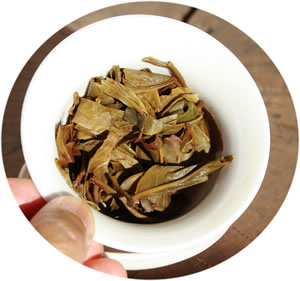
- Ripened Pu-erh tea (Shou, cooked): due to the above nature, there are pu-erh teas that have been put through a speed fermenting process before compressing, a process called ‘ Dui’ (渥堆). The teas are therefore ready to be consumed immediately after production, although the post-fermenting process continues to a less degree.
For those who are not familiar with Pu-erh teas, the raw Pu-erh is closer to the unfermented green tea character wise – light and refreshing, while the ripened Pu-erh is closer to the fully fermented black tea – smooth and full body flavor.
Further background:
Fermenting is a crucial step for tea making, the degree of fermentation form the basis for most tea categorization:
-
Green teas remain unfermented,
-
White teas are lightly fermented,
-
Oolong teas are semi fermented,
-
black teas are fully fermented
- Pu-erh tea post-fermentation
Fermentation is a metabolic process in which an organisms are invloved. In the context of tea production fermentation is a natural process. After the harvest of the tea leaves, they are withered, tossed and left to ferment facilitated by the natural organisms in the environment. The process is halted at the desired stage by suitable application of heat before the leaves are fully dried ( ie through mild steaming or frying).
Pu-erh tea is processed as such that fermentation is allowed to continue after processing has been completed.
Recent Articles
-
Can I drink white tea every day?
Absolutely! The Chinese say it is Ok not to have food for 3 days, but not without tea for a day. Like all other Chinese teas, green tea, yellow tea,…
-
Pu-erh white frost vs mould
I was again approached by a customer today to say there was some ‘mould’ discovered on an aged Pu-erh tea cake received, which is actually the ‘white frost’. I thought…
-
Is Ok to drink green tea every day?
Green tea has had a consumption history in China for more than 2000 years. The Chinese say “it is Ok to go with food for 3 days, but not without…
-
Is it Ok to drink Jasmine tea every day
Absolutely. Jasmine tea has been consumed in China for nearly 800 years, especially in certain regions such as the Fuzhou area of the Fujian province. Tea is food in China….
-
Green teas handmade vs machine-made
Green teas have been traditional hand made in China and Japan for millenniums. It is labor intensive and inevitably keeping the tea prices up. I have recently visited a green…
-
How to tell a Pu-erh quality by its wet leaves
A well aged Pu-erh tea is a sought-after product in the Pu-erh community. There are various methods however to make a Pu-erh tea looking like aged, eg high temperature &…