Pu-erh tea, ripened or raw
By Valley Green Tea
Posted On February 9, 2017
To understand the differences between a raw (Sheng) and a ripened pu-erh, one has to understand a bit of the unique pu-erh tea plant and the history of its consumption.
Pu-erh tea plant
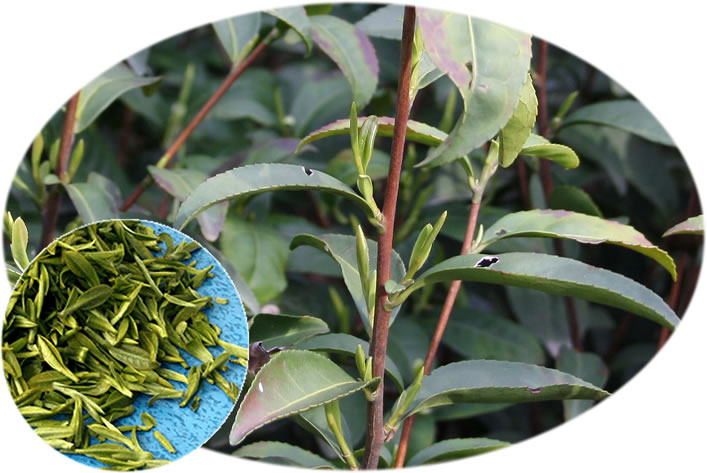
 Unlike all other classes of teas, pu-erh tea is made of leaves harvested from tea trees but not tea bushes. The leaves are substantially bigger and much rougher in texture when first harvested.
Pu-erh consumption and trade
Most of the Pu-erh tea lovers would have heard about, or seen films about the ‘The ancient tea road’. Pu-erh tea was among the most traded commodities in the ancient Chinese history. Its earliest trade was recorded more than 2000 years ago on scripts written on the palm leaves by the Dai ethnic minorities. The Yun-Nan province was the center of tea production and the teas produced were transported by human porters, horses and donkeys out of the mountainous area into areas such as Tibet, crossing three provinces and beyond. It covered a distance of more than 10,000 Kilometres and could take up to 6 months.
To facilitate this ancient trade, the teas were compressed into cakes. Somewhere along the way it was discovered that the teas’ quality enhanced significantly with age as a result of their post fermentation while the teas were transported and stored: tea colour became darker, rough texture turned mellowing and silky, bitterness disappeared and aroma and aftertaste elevated.
The ripened Pu-erh tea
To reach this optimal fermentation state of Pu-erh tea for its daily consumption through its natural fermentation, it is generally believed 2 years is the minimum after harvesting. For certain consumers however, to purchase a tea and store for two or more years before being able to use was not necessary a practice of choice. A ‘渥堆Wo Dui’ process was subsequently invented. The process of ‘Wo Dui’ is effectively piling up the tea leaves, sprinkling with water and covering the pile up certain period after the ‘杀青(killing green)’ stage. ‘Wo Dui’ is unique for Pu-erh tea and it is a speed fermentation process. The teas made after the additional ‘Wo Dui’ are suitable for consumption immediately.
The differences between a raw (Sheng生) and ripened (Shou熟) Pu-erh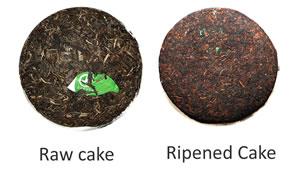
| Raw |
Ripened |
|
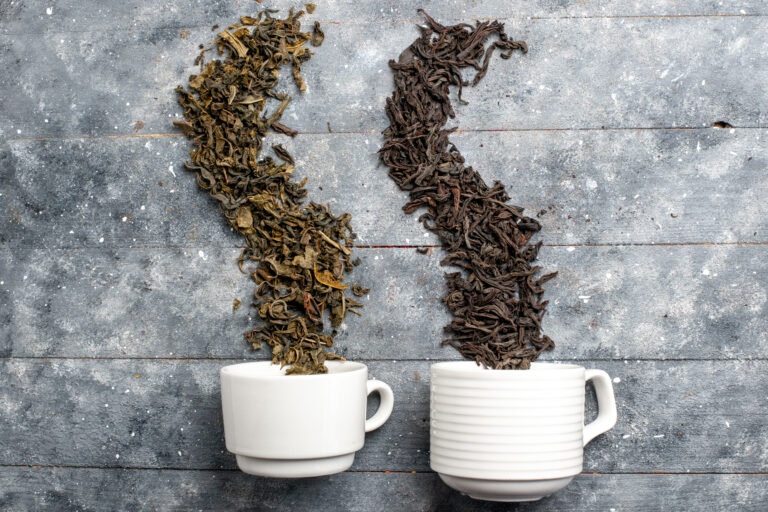
| Minimum time for consumption | 2 years | immediately |
| Tea brew colour | light | dark |
| Texture | relatively less smooth | smooth |
| Aroma/taste | fragrant/fresh | earthy/aged |
| Aftertaste | refreshing | subtle/woody |
| Collection/aging value | more | less |
Will an aged raw pu-erh tea eventually turn into a ripened Pu-erh?
Not necessary. A natural fermentation of a Pu-erh tea is different from a speed one. A premium raw Pu-erh will develop it unique fragrance based on its original characteristics with all the aged pu-erh tea’s qualities: smooth texture, bright and clear brew, pure yet earthy aroma and strong and commending aftertaste.
Recent Articles
-
Can I drink white tea every day?
Absolutely! The Chinese say it is Ok not to have food for 3 days, but not without tea for a day. Like all other Chinese teas, green tea, yellow tea,…
-
Pu-erh white frost vs mould
I was again approached by a customer today to say there was some ‘mould’ discovered on an aged Pu-erh tea cake received, which is actually the ‘white frost’. I thought…
-
Is Ok to drink green tea every day?
Green tea has had a consumption history in China for more than 2000 years. The Chinese say “it is Ok to go with food for 3 days, but not without…
-
Is it Ok to drink Jasmine tea every day
Absolutely. Jasmine tea has been consumed in China for nearly 800 years, especially in certain regions such as the Fuzhou area of the Fujian province. Tea is food in China….
-
Green teas handmade vs machine-made
Green teas have been traditional hand made in China and Japan for millenniums. It is labor intensive and inevitably keeping the tea prices up. I have recently visited a green…
-
How to tell a Pu-erh quality by its wet leaves
A well aged Pu-erh tea is a sought-after product in the Pu-erh community. There are various methods however to make a Pu-erh tea looking like aged, eg high temperature &…