Tea & Clay teapots
By Valley Green Tea
Posted On July 14, 2008
Clay tea pots have a long association with the culture of Chinese tea – being are used for brewing teas during tea ceremonies, as well as by traditionalists for individual consumption.
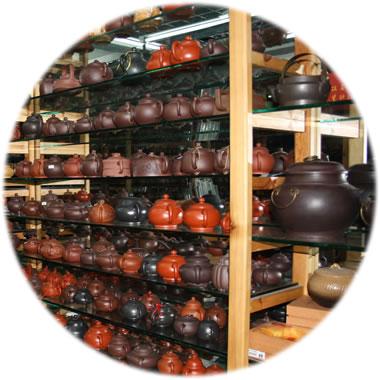 Why clay?
Teas are sensitive to foreign odors: Modern synthetic materials such as plastics and metals have a scent that can mask subtle delicate tastes associated with high quality teas. Clay does not have a scent that interferes with tea.
Tea leaves brewed in a clay teapot are believed to be more vibrant. It is thought that micro cavities embedded in the clay used to make the teapots allow tea to ‘breath’ through. This is a similar phenomenon to boiling green vegetables without the lid, as opposed to lid on (which results in greater degree of “stewing”). In this regard clay is superior to glass and ceramics.
Why so small a teapot?
The small volume of the tea accessory ensures the tea leaves are constantly flashed and brewed by a small amount of freshly boiled water as tea is served frequently. The result is a “fresher” serve of tea, as opposed to a tea made from excessively soaked leaves – which can yield a bitter edge to the taste.
Recent Articles
-
Can I drink white tea every day?
Absolutely! The Chinese say it is Ok not to have food for 3 days, but not without tea for a day. Like all other Chinese teas, green tea, yellow tea,…
-
Pu-erh white frost vs mould
I was again approached by a customer today to say there was some ‘mould’ discovered on an aged Pu-erh tea cake received, which is actually the ‘white frost’. I thought…
-
Is Ok to drink green tea every day?
Green tea has had a consumption history in China for more than 2000 years. The Chinese say “it is Ok to go with food for 3 days, but not without…
-
Is it Ok to drink Jasmine tea every day
Absolutely. Jasmine tea has been consumed in China for nearly 800 years, especially in certain regions such as the Fuzhou area of the Fujian province. Tea is food in China….
-
Green teas handmade vs machine-made
Green teas have been traditional hand made in China and Japan for millenniums. It is labor intensive and inevitably keeping the tea prices up. I have recently visited a green…
-
How to tell a Pu-erh quality by its wet leaves
A well aged Pu-erh tea is a sought-after product in the Pu-erh community. There are various methods however to make a Pu-erh tea looking like aged, eg high temperature &…